Harold's visit to Queenie at St Bernadine's Hospice
The Unlikely Pilgrimage of Harold FryHarold's visit to Queenie at St Bernadine's Hospice is the emotional and moral climax of his pilgrimage. After eighty-seven days and 627 miles, he reaches the hospice believing that his continued walking might keep Queenie alive. The encounter first exposes the limits of that faith: Queenie is not restored, the journey has not erased twenty years of silence, and Harold must decide whether love means achieving a miraculous cure or remaining present before suffering that cannot be repaired.
Arrival and the Crisis of Meaning
Harold first arrives at the hospice in a state of exhaustion and expectation. The modern, unassuming building is bordered by trembling trees, an old-fashioned street lamp, a car-park sign, and patients resting in deck chairs on the lawn. The ordinary details intensify the strangeness of the moment. His journey has been immense to him, yet the hospice receives it without ceremony: no one is waiting, and no one appears to notice when he arrives or leaves. The supposed sacred destination is not transformed into a public spectacle. It remains a quiet building, while the meaning of the pilgrimage exists almost entirely within Harold.
At the entrance, Harold hesitates with his finger suspended over the buzzer. He remembers roads, hills, houses, fences, shopping centres, streetlights, and post boxes, but sees nothing extraordinary in them. The commonplace landscape that carried him north suddenly seems unable to justify the faith he placed in it. He is afraid precisely when triumph should have arrived. His doubt is not simply fear of Queenie's condition; it is a crisis in the story he has made of himself. He has treated walking as a promise powerful enough to save her, but at the hospice he must ask what the promise means when the outcome remains beyond his control.
The Second Arrival
Harold turns away from the gates rather than immediately entering. He imagines returning to the old life he had nearly forgotten, to the divided home in which he and Maureen sleep in separate bedrooms and use trinkets to keep the outside world at a distance. The hospice therefore becomes a threshold between two forms of existence. Behind him lies the pilgrimage, with its roads, strangers, memories, and improvised faith; ahead lies Queenie and the unresolved domestic past represented by Maureen and David.
He returns to the hospice later with no hesitation. His feet fall softly on the recently laid tarmac, and he presses the buzzer while closing his eyes and groping for the wall. He has little energy left for explanations. A woman in a cream, high-collared robe and black over-garment opens the door, and Harold identifies himself by stating that he has walked an awfully long way to save Queenie. The words connect the final scene to the phone call that began the journey, when he told the hospice that Queenie had only to wait because he would keep walking and she must keep living. The promise has carried him to the door, but the visit will force him to understand its limits.
Confronting Queenie's Body
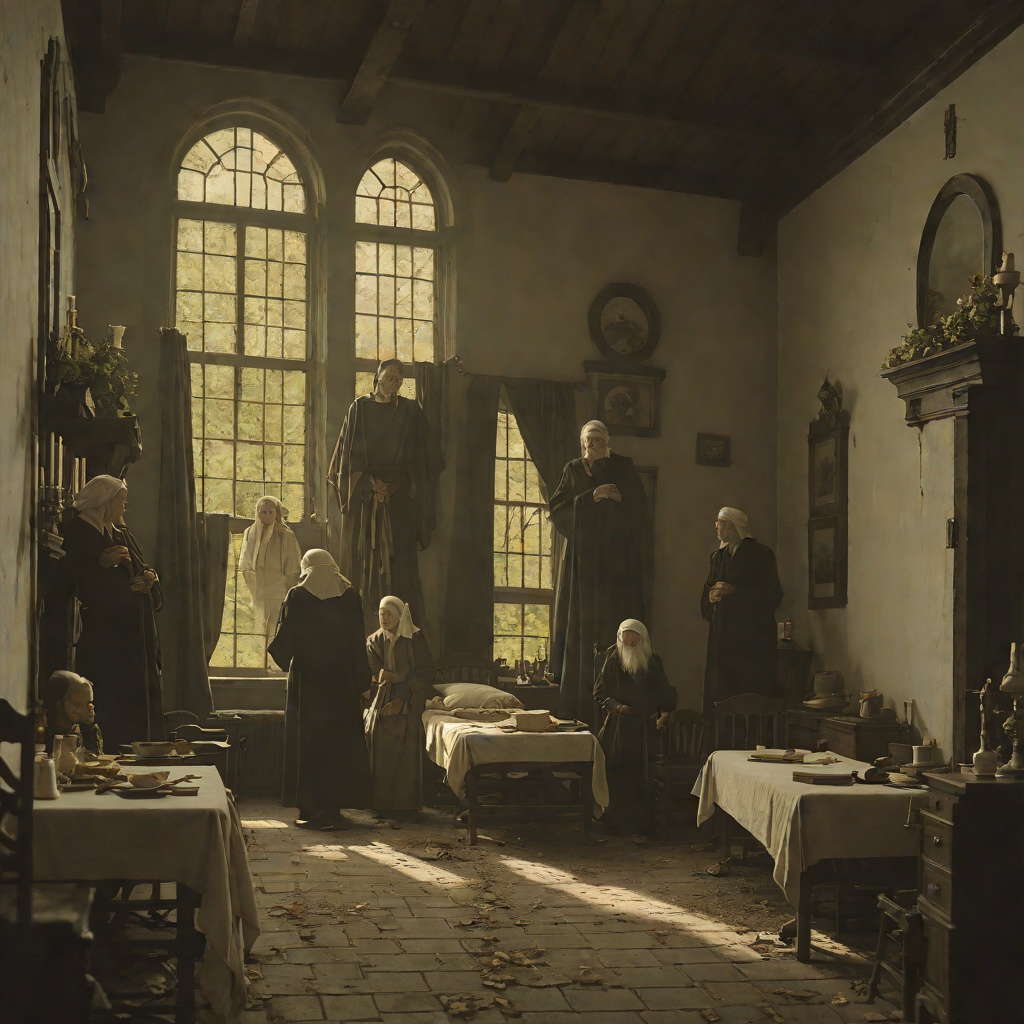
Sister Philomena directs Harold toward the bed. Queenie lies beneath ice-white sheets, reduced almost to the size of a child. Her remaining hair is thin and white, her skull visible beneath papery skin, and her neck is bandaged. The disease has distorted her face so severely that Harold initially sees a ghost or shell, someone who looks like a person he has never met. Her altered appearance makes visible the bodily cost of the cancer that had previously existed for him mainly as news, memory, and motive.
Harold's first response is recoil. He considers leaving the presents and writing a card instead, because writing would allow him to offer comfort without having to endure the physical reality before him. His journey has brought him through pain, weather, exhaustion, and the memories he spent twenty years repressing, but the face of Queenie presents a different ordeal: it demands direct recognition. He cannot preserve an idealized Queenie from the past while standing beside the dying woman in the present.
Queenie turns her head slowly toward him, and they meet for the first time in twenty years. Harold's breath stops when he sees the growth that has forced one eye closed and dragged the lower half of her mouth sideways. His groan escapes before he is aware of making it. The scene refuses an easy image of healing. Queenie's body is not a symbol that can be transcended by Harold's faith; it is a suffering body that elicits shock, shame, tenderness, and the instinct to hide.
Memory, Witness, and Return
The encounter opens the buried history of Harold and Maureen's son David. During the visit, Harold relives the afternoon when he drove Maureen to the funeral director's so she could see David in his coffin. She had brought a red rose, a teddy bear, and a pillow for beneath his head, while Harold had nothing to give. Outside, overwhelmed and uncertain what a father could say to a dead son, he accepted a cigarette from a passer-by despite having stopped smoking years earlier. The memory links Queenie's dying body to the earlier body Harold could not save, and it explains why the hospice becomes a place of repeated confrontation with helplessness rather than a simple destination.
Harold's walk had already made memory unavoidable. On the open road, his thoughts moved freely through the past: he saw Maureen in the garden, remembered the fragility of David's head as a newborn, and returned to the loneliness of his adolescence after his mother left. He also encountered the memory of the afternoon twenty years earlier when everything came to an end, a memory he tried to outrun through physical speed and pain. The hospice visit gathers these returns into one scene. Walking has not cured the trauma; it has made Harold capable of witnessing it without remaining entirely on the sidelines.
His letter to the garage girl gives the trauma a fuller narrative shape. Harold explains that David was depressed, addicted to mixing alcohol with pills, unable to find work, and eventually hanged himself in the garden shed. Harold discovered him too late. Maureen could not leave the house, covered the windows with net curtains, and kept David's room exactly as it was. Queenie knew the family history and quietly looked after Harold at work, while he later drank, dismantled the shed, and committed an act for which Queenie took the blame and lost her job. By writing this account, Harold begins to tell the story he and Maureen had allowed to govern their lives through silence. His bedside encounter with Queenie turns that confession from explanation into embodied witness.
The Gesture of Recognition
After remembering David's death and the near-drowning that preceded it, Harold understands that remaining safely outside another person's suffering is no longer possible. He walks to Queenie's bedside in silence and sits beside her. Her fingers are so fragile that they seem barely flesh, but they curl imperceptibly and touch his. The gesture is small and almost without language; it does not promise recovery or explain the past. It establishes contact where distance had endured for twenty years.
Harold thinks of telling Queenie that it seems a long time since he found her in the stationery cupboard. Whether the words are spoken or remain only a thought, the remembered scene joins their first intimacy to this final meeting. The old workplace encounter and the hospice bedside are separated by illness, dismissal, grief, and the long pilgrimage, yet both are marked by quiet attention rather than grand declarations. Queenie's hand slips from his as her breathing slows, and she dozes. The visit's force lies in its incompletion: Harold cannot make the past speak perfectly, but he can sit with Queenie rather than flee from what he sees.
Consequences and Significance
The hospice visit changes the meaning of Harold's promise. At the beginning, he expresses it as a literal bargain: if he keeps walking, Queenie must keep living. By the time he reaches her bedside, the promise cannot be fulfilled in that literal form. Its value shifts from controlling Queenie's fate to refusing abandonment. The pilgrimage becomes an act of attention, allowing Harold to arrive, see Queenie as she is, and offer the presence that he failed to offer adequately to David and that he and Maureen lost within their marriage.
This shift also prepares Harold's reconciliation with Maureen. When Harold returns and breaks down, Maureen holds him until his grief passes. She understands that he got up and did something despite not knowing whether he could reach the destination, and she calls that effort a small miracle. Her declaration, "I love you, Harold Fry," identifies the true result of the journey. Harold has not saved Queenie from death, but he has crossed the paralysis that followed David's suicide and reopened the possibility of love within his marriage.
The visit therefore functions as a reversal of the pilgrimage's original fantasy. Harold set out to rescue Queenie, yet the journey leads him toward a more difficult form of redemption: accepting that no walk can restore the dead, cure Queenie's cancer, or return the family to its former life. What walking makes possible is not mastery over death but movement toward another person. At St Bernadine's Hospice, arrival means accepting limits while still choosing contact, and the final act of the pilgrimage is not a miracle of survival but the recovery of human presence.